About
Study Overview
Study Overview
The RIPPLE Study is a University of Wisconsin–Madison research study in the Town of Stella and surrounding area. We are studying how people may be exposed to PFAS through drinking water, locally caught or grown foods, and other environmental sources. We will measure PFAS in blood and examine whether PFAS exposure is related to cholesterol and other blood lipids over time.
The study grew from questions raised by people in the community about PFAS contamination and what it may mean for their health. Community members will continue to help guide the study through the RIPPLE Community Advisory Board (CAB). Learn more about the CAB
What are we trying to learn?
We want to understand:
- Which PFAS are present in participants’ blood and in possible sources of exposure.
- How drinking water, food, and other environmental sources may contribute to exposure.
- Whether PFAS levels are related to cholesterol and other blood lipids, including changes over time.
What does participation involve?
We plan to invite eligible people in the study area by mail. Interested people will complete a short screening form before scheduling an appointment at Stella Town Hall.
Participation will include:
- Completing a survey at home. You will answer questions about your health, drinking water, diet, and activities that could affect PFAS exposure.
- Completing an appointment at Stella Town Hall where a staff member will:
- Collect a blood and urine sample
- Measure your height, weight, and blood pressure
- Having a staff member visit your home to collect a drinking water sample
Some households may be invited to provide additional environmental or locally produced food samples.
We plan to invite participants back for a second visit approximately two years later. Measuring PFAS and blood lipids at both visits will help us study how they change over time.
Learn more about participation
How will results be shared?
Participants will receive their own clinical cholesterol and blood PFAS results, as described on our FAQ page . Households will receive results from their environmental samples. We will share overall study updates and findings through this website, community meetings, and other communications. Public reports will present combined results so individual participants are not identified.
Study Timeline
The study team is actively preparing to launch study appointments in the Winter of 2026-2027. Stay tuned for updates!
Study Timeline for the first year
PHASE 1
Prepare the study with community input
Fall 2026
PHASE 2
Invite and enroll participants
Winter 2026–2027

PHASE 3
Study appointment
Winter 2026 – Spring 2027
PHASE 4
Return individual results
Winter – Summer 2027
PHASE 5
Food, soil, air, dust sampling
Share progress and overall findings
Summer – Fall 2027
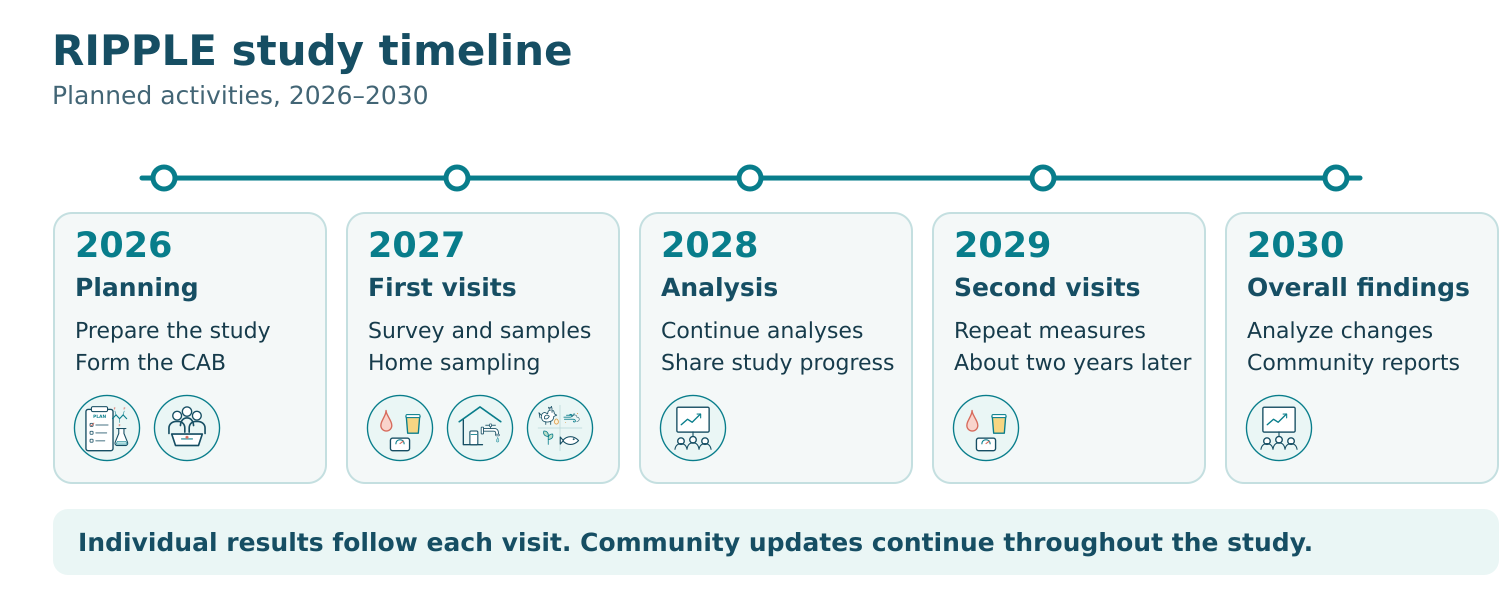
RIPPLE Study appointments will occur in the winter-spring of 2027 (1st study) and again in the winter-spring of 2029 (2nd study). Household water sampling will occur shortly after the 1st study visit, and selected households will be sampled for food, soil, dust and air in the summer-fall of 2027. Study progress and findings will be shared with residents and community members throughout the study.